A couple of years ago, we decided to finally visit Egypt. We booked a resort in Hurghada and planned a day trip to Cairo while we were there.
Doing a day trip from Hurghada to Cairo is not for everyone. It’s quick and a little chaotic, but unforgettable. Our day started at 2 a.m., when most people are still sound asleep. We hopped on a bus together with other sleepy tourists, and headed to Cairo.
The ride to Cairo took about seven hours and included a few security checkpoints along the way. Seeing armed guards was a little intimidating, but it made me happy we chose an organized tour instead of driving ourselves, which we usually prefer.
(You can find a similar tour here: From Hurghada: Pyramids & Museum but I recommend booking through the hotel/resort you’re staying in.)
First Stop: The Egyptian Museum
By the time the sun came up, we were in the middle of Cairo’s famous traffic. Imagine endless honking, cars weaving between invisible lanes, and no one paying attention to traffic lights — basically, organized chaos. Thankfully, our driver handled it like a pro.
Our first stop was the Egyptian Museum. The heart of Cairo’s history for over a hundred years. With its dusty pink façade and old-school charm, the museum housed over 120,000 artifacts. When we visited in October 2022, it was one of the last chances to see it before the artifacts were moved to the brand-new Grand Egyptian Museum (GEM) near the Pyramids of Giza.
The GEM had been in the works for more than 20 years and promised a massive, modern space with better displays and even a giant Ramses II statue at the entrance. It was designed to be the largest archaeological museum in the world. One of the highlights would be seeing all of King Tutankhamun’s treasures in one place — something we just caught a glimpse of before the move.
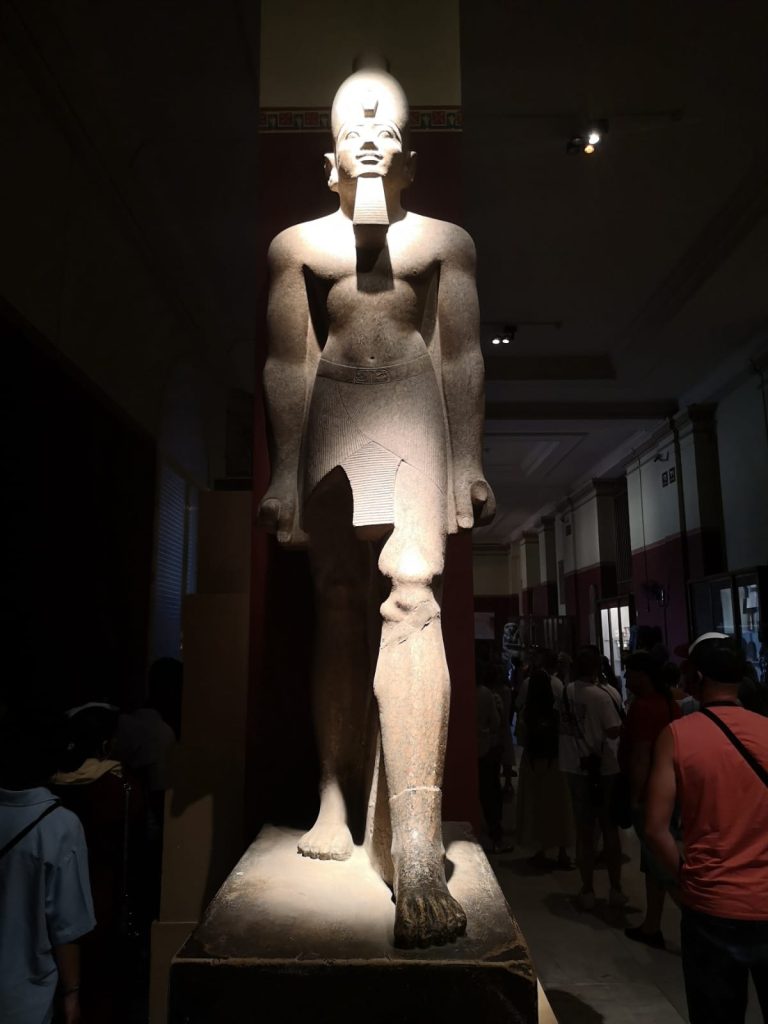
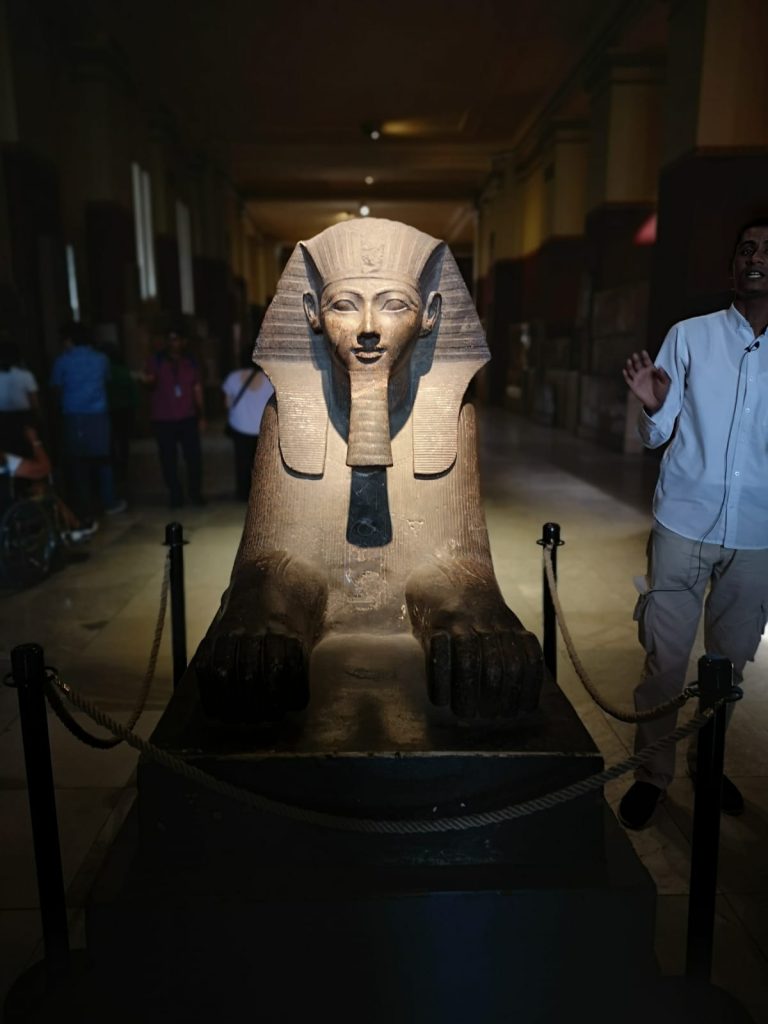
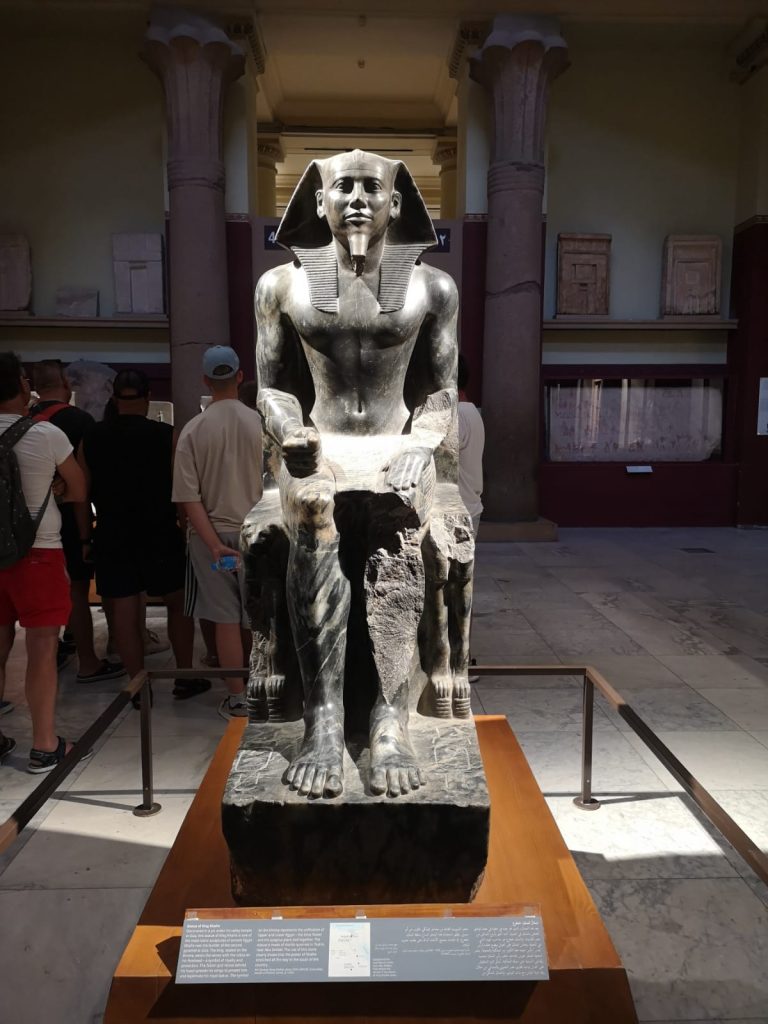
Inside the Egyptian Museum, our guide led us through halls brimming with history, regaling us with tales of pharaohs, tomb robbers, and ancient curses.
For two hours, we wandered through corridors filled with relics, some arranged methodically, others displayed in a way that felt almost haphazard—giving the museum a sense of old-world charm. It was bittersweet knowing that we were witnessing the end of an era, but also exciting to think of how these treasures would soon be displayed in a modern, purpose-built space. As we left, we couldn’t help but feel a little smug—we had seen history just before it moved into history itself.
Lunch on the Nile
After the museum, it was time for a much-needed break. Our tour included lunch on a private boat on the Nile — all for 35 euro price, which felt like a bargain.
Getting on the boat was a relief after the noise and traffic of Cairo. For a brief moment, it was easy to forget the morning’s traffic madness and the packed itinerary ahead.
The buffet had a little bit of everything. The spread featured a mix of international and traditional Egyptian dishes, catering to both adventurous eaters and those who preferred to stick to familiar flavors. There were freshly baked baladi bread (Egypt’s staple flatbread), fragrant koshari (a mix of pasta, rice, lentils, and crispy onions, Egypt’s beloved street food), and perfectly spiced grilled meats. For those craving something lighter, the salad selection was impressive, with everything from crisp cucumbers in yogurt sauce to tahini-slathered eggplant. And of course, no Egyptian meal is complete without desserts, so we indulged in sweet, syrupy basbousa and delicate baklava that melted in the mouth. It was exactly what we needed before diving back into sightseeing.
The Pyramids of Giza and the Sphinx
Next up were the Pyramids of Giza. No matter how many times I’ve seen them in photos, nothing quite prepared me for the moment when I spotted these colossal structures with my own eyes. I found ourselves glued to the window, watching as they grew larger and more imposing with every passing minute..
When we finally arrived, our tour guide gathered us for a quick rundown of the plan: we would visit all three pyramids—Khufu (the Great Pyramid), Khafre, and Menkaure—followed by the Sphinx. We had 30 to 40 minutes to explore, take photos, and, if we wanted, venture inside one of the pyramids (for an extra charge, of course). We had heard mixed reviews about the experience—some described it as an otherworldly journey through history, while others called it a hot, cramped, overpriced tunnel to nowhere. Given my mild claustrophobia (and the fact that countless people had already told us it wasn’t worth it), we decided to skip the interior and fully soak in the grandeur from the outside.
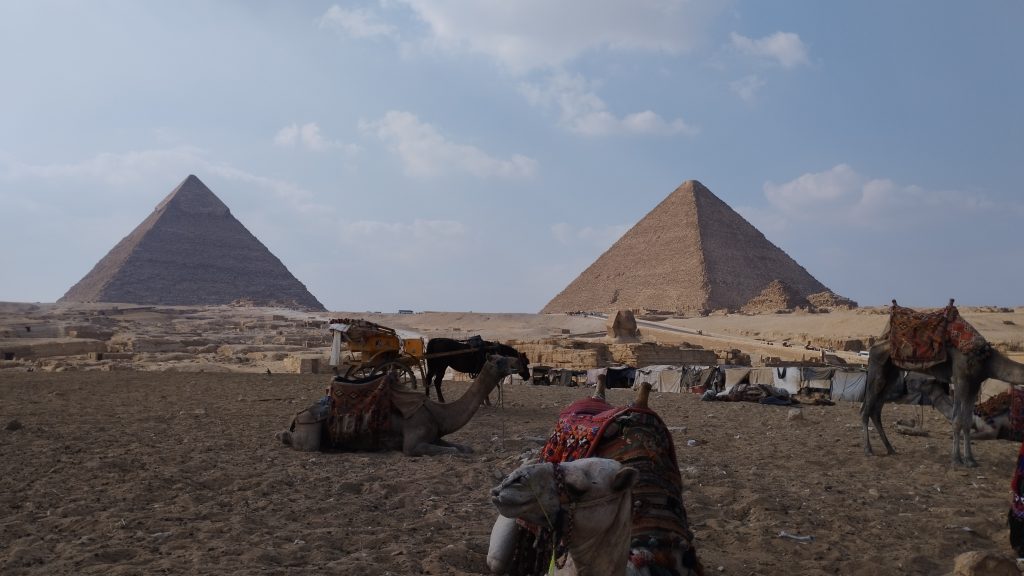
We spent our time wandering around each pyramid, completely in awe. Standing next to these 4,500-year-old structures, built with limestone blocks weighing up to 15 tons each, it was impossible not to be overwhelmed by their sheer size and historical significance. We talked about how mind-blowing it was that these tombs had withstood millennia of sandstorms, invasions, and earthquakes, yet still stood tall, outliving entire civilizations. It’s no wonder they were named one of the Seven Wonders of the Ancient World—in fact, they’re the only one still standing today.
Curious to chat with the locals and maybe hear some stories, we tried striking up conversations, but unfortunately, most interactions quickly turned into a sales pitch. Whether it was camel rides, postcards, or “authentic” artifacts, everyone seemed more interested in making a sale than making conversation. The vendors were persistent, sometimes aggressively so, and it took some effort to escape the endless offers for “special price, just for you, my friend!” Eventually, we mastered the art of firm yet polite declines and focused on enjoying the once-in-a-lifetime experience of simply being in the presence of one of humanity’s greatest achievements.
A Quick Stop at the Papyrus Museum
Our final cultural immersion took place at what we were told was an authentic papyrus museum, though in reality, it was a clever blend of museum and retail space—a common theme in guided tours. Still, we didn’t mind, especially once we stepped inside and were greeted by walls lined with stunning papyrus paintings, each more mesmerizing than the last. Unlike the street vendors pushing so-called “real papyrus” at suspiciously low prices, this place felt legit, and our group was soon seated for a fascinating presentation by a brilliant young woman who clearly loved her craft.
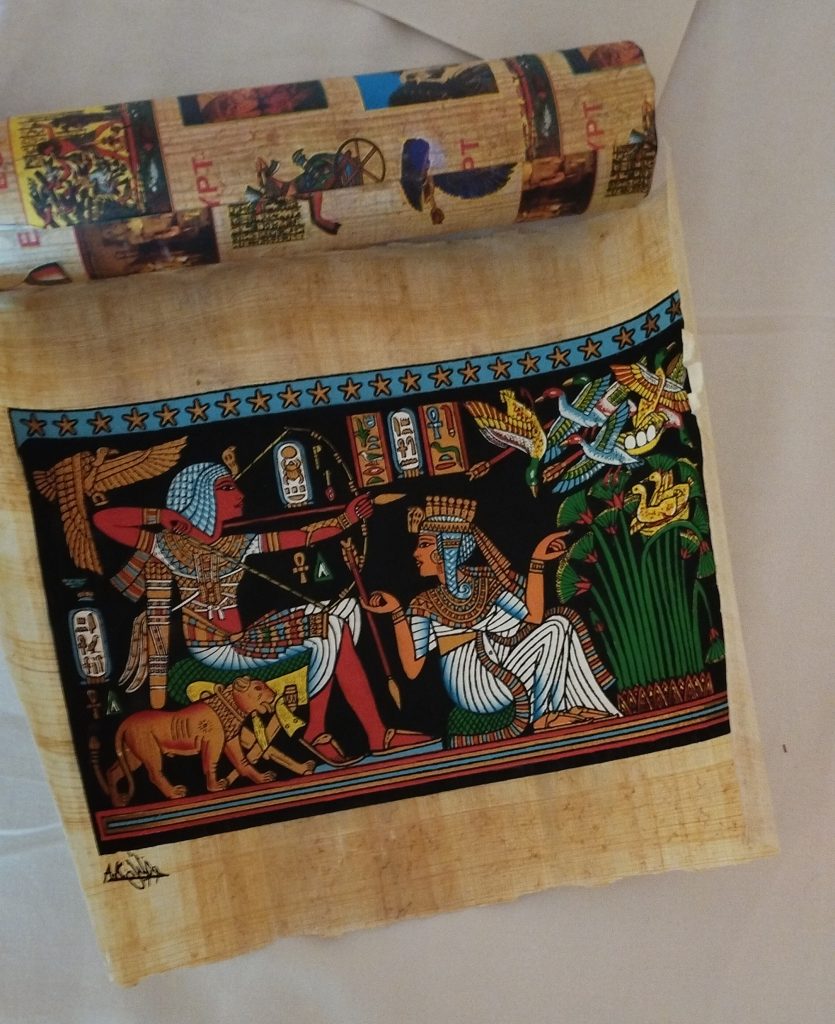
She took us through the meticulous process of transforming papyrus reeds into paper, just as the ancient Egyptians had perfected over 5,000 years ago. With practiced hands, she demonstrated how the plant’s inner fibers are cut into strips, soaked, then carefully layered in a crisscross pattern before being pressed and dried. The result? A durable, flexible sheet that could last for centuries—far longer than modern paper. But the real goldmine of knowledge came when she taught us how to spot fake papyrus (hint: if it cracks, crumbles, or feels too much like banana leaf, it’s a cheap imitation).
After the demo, we browsed the colorful paintings. Some depicted scenes from ancient Egyptian mythology, others featured hieroglyphic prayers for prosperity and protection. The most mind-blowing pieces, though, were the ones that changed under different lighting—one motif appearing in daylight, only to reveal an entirely different image under fluorescent light, glowing like a hidden treasure. I was completely entranced, moving from one masterpiece to the next, admiring every fine detail.
While the rest of the group had already made their purchases and were waiting by the exit, I was still torn between several pieces, weighing my options as if I were choosing an artifact for a museum exhibit. Eventually, after much internal debate (and a few impatient glances from fellow travelers), I settled on a stunning piece that I knew I’d regret not taking home.
Final Thoughts
As the sun set, we boarded the bus back to Hurghada and got to the hotel around midnight. It was a long, exhausting day — over 14 hours on the road, lots of walking, and a jam-packed schedule. But the October weather was mild compared to Egypt’s brutal summer heat, which definitely helped.
Was it tiring? Yes. Would we do it again? Absolutely. Seeing Cairo’s incredible history, even just for a day, was worth it. But if I can choose, next time I’d definitely like to stay longer and see the pyramids at night.
If you’re planning your own adventure, don’t miss my earlier articles packed with tips, travel hacks, and more destination diaries. You’ll find plenty of inspiration to help you make the most of your trip!
Planning a Group Trip? Here’s How to Get It Right Every Time
Affordable Luxury: How to Experience Thrilling UAE on Budget
Until next time,
Asya


Good https://t.ly/tndaA
Very good https://urlr.me/zH3wE5
Good https://urlr.me/zH3wE5
Awesome https://rb.gy/4gq2o4
Good https://is.gd/N1ikS2
Good https://is.gd/N1ikS2
Awesome https://is.gd/N1ikS2
Good https://is.gd/N1ikS2
Very good https://is.gd/N1ikS2
Good https://is.gd/N1ikS2
Good https://is.gd/N1ikS2
Good https://is.gd/N1ikS2
Good https://is.gd/N1ikS2